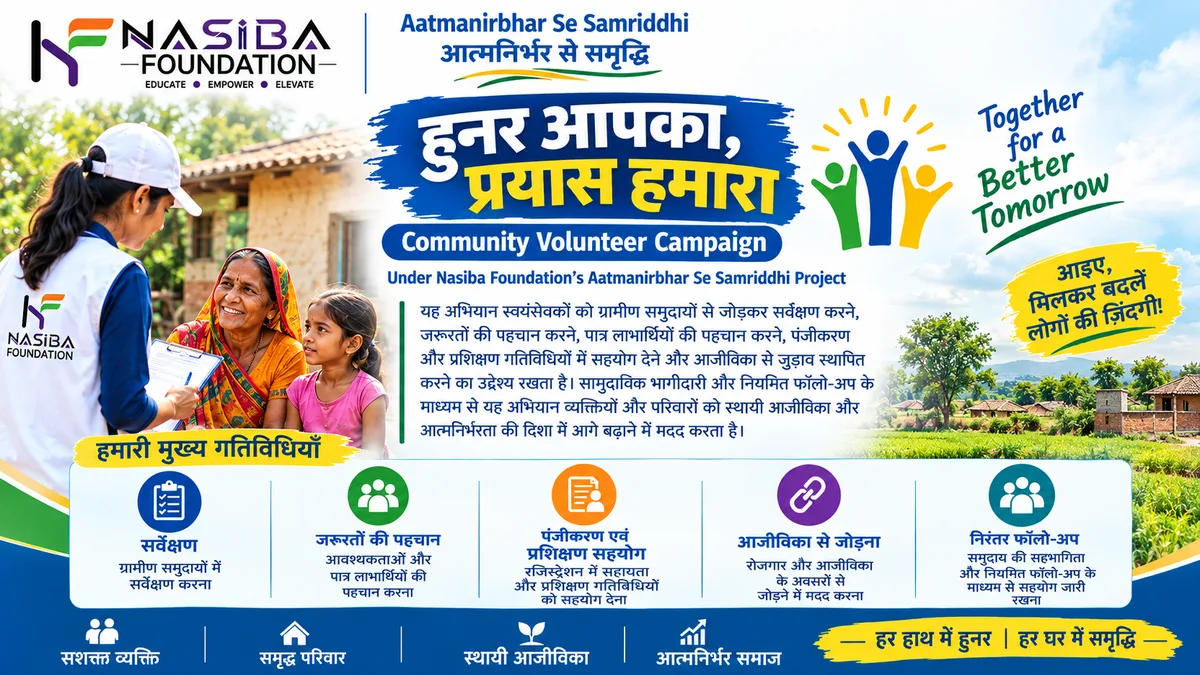
India's rural areas are home to millions of children who lack access to quality education. According to the ASER 2020 report, nearly 30% of rural children in the 6-14 age group are out of school. In this scenario, NASIBA FOUNDATION has been at the forefront of addressing this issue by implementing an innovative education program. The program relies on community mobilization and partnership with local Self-Help Groups (SHGs) to reach the last mile and provide education to thousands of children.
NASIBA FOUNDATION's approach is unique in that it leverages the strengths of local communities to provide education. By partnering with SHGs, NASIBA FOUNDATION is able to tap into the existing network of community leaders and mobilize them to promote education. This approach has been successful in reaching remote villages where access to education is limited.
One of the key challenges in providing education in rural India is the lack of infrastructure. Many rural schools lack basic amenities such as classrooms, toilets, and drinking water. In such areas, NASIBA FOUNDATION has been instrumental in setting up makeshift schools and providing educational materials to children. For instance, in the district of Satna in Madhya Pradesh, NASIBA FOUNDATION set up a makeshift school in a village that lacked a functional school. The school was equipped with basic amenities and educational materials, and soon, children from neighboring villages started attending the school.
NASIBA FOUNDATION's education program has also been successful in promoting women's empowerment. By providing education to girls, NASIBA FOUNDATION is able to empower them to take control of their lives and make informed decisions about their education and career. This is particularly important in rural India where girls often face significant barriers to education.
In conclusion, NASIBA FOUNDATION's innovative approach to education has been a game-changer in rural India. By leveraging community mobilization and partnership with local SHGs, NASIBA FOUNDATION has been able to reach the last mile and provide education to thousands of children. As the government launches initiatives such as the PM POSHAN program to improve education in rural India, NASIBA FOUNDATION's approach provides a valuable model for other NGOs to replicate.