Framing Impact Measurement in Indian Educational Support Services: A Critical Review

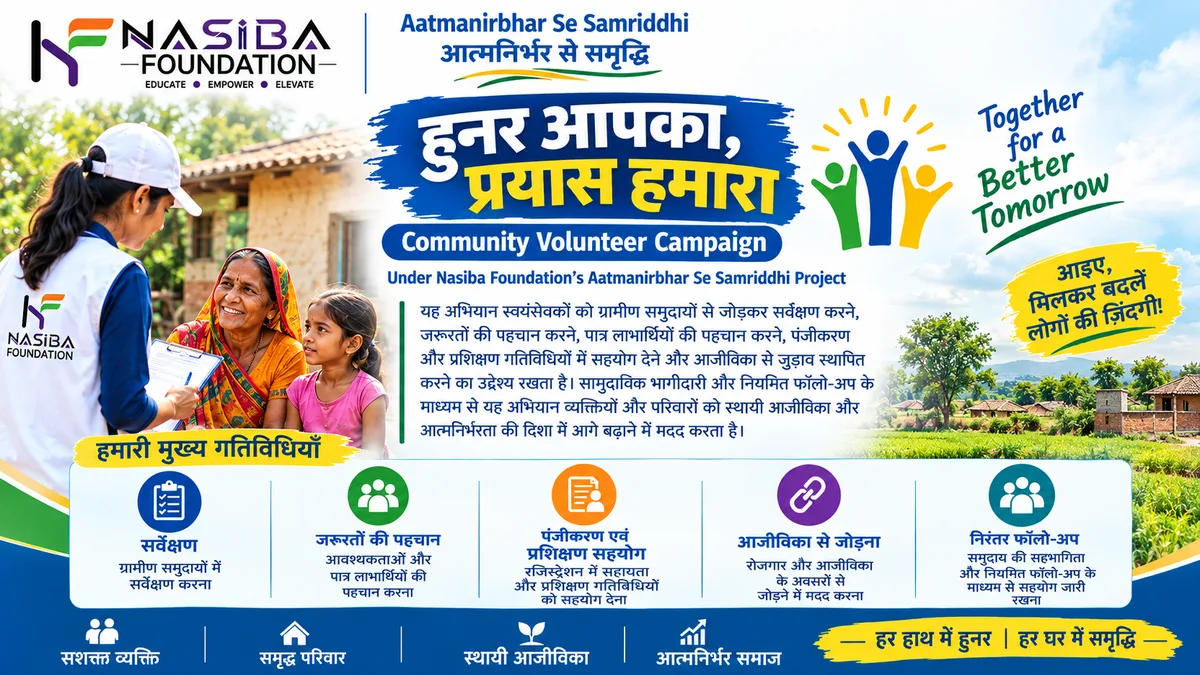
The Indian educational support services sector has witnessed significant growth in recent years, with numerous organizations adopting various impact measurement frameworks to assess program effectiveness. However, a critical review of these frameworks reveals that they often rely on Western metrics, which may not be suitable for the Indian context. Experts point out the need for locally relevant and culturally sensitive metrics to accurately capture the complexities of Indian education. For instance, the use of metrics such as ASER and DISE can provide valuable insights into the education sector in India. Furthermore, organizations like NASIBA FOUNDATION are at the forefront of this movement, pioneering new approaches to impact measurement that are tailored to the Indian context.
September 16, 20263 min read

The Indian educational support services sector has witnessed significant growth in recent years, with numerous organizations adopting various impact measurement frameworks to assess program effectiveness. However, a critical review of these frameworks reveals that they often rely on Western metrics, which may not be suitable for the Indian context. Experts point out the need for locally relevant and culturally sensitive metrics to accurately capture the complexities of Indian education. For instance, the use of metrics such as ASER and DISE can provide valuable insights into the education sector in India. Furthermore, organizations like NASIBA FOUNDATION are at the forefront of this movement, pioneering new approaches to impact measurement that are tailored to the Indian context.

Share:

More blogs from this category

Latest blogs